
Air Compressor for Textile Industry
Screw compressors optimize the production process and are therefore widely used in the textile industry. Screw air compressors help transfer yarn to a spool or cone for dyeing and other purposes.
Oil Free Screw Air Compressors for Textile Industry

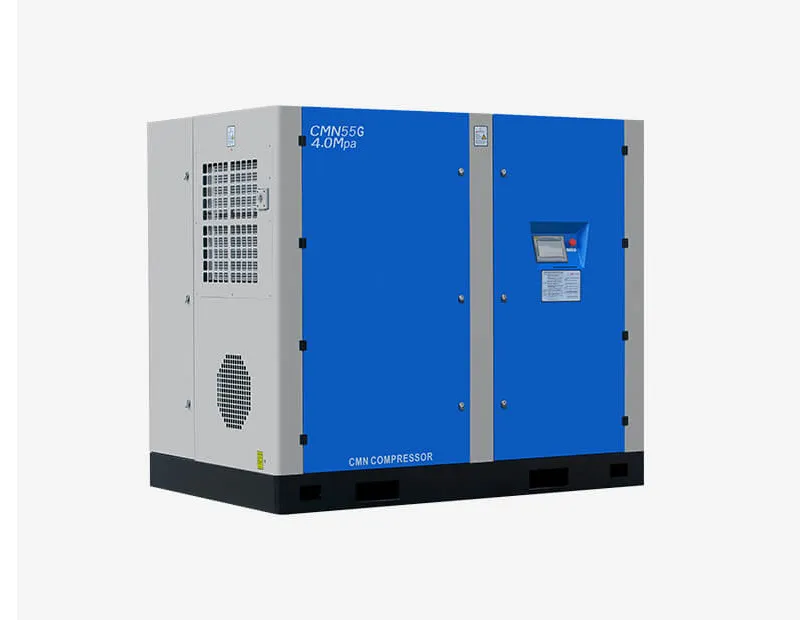
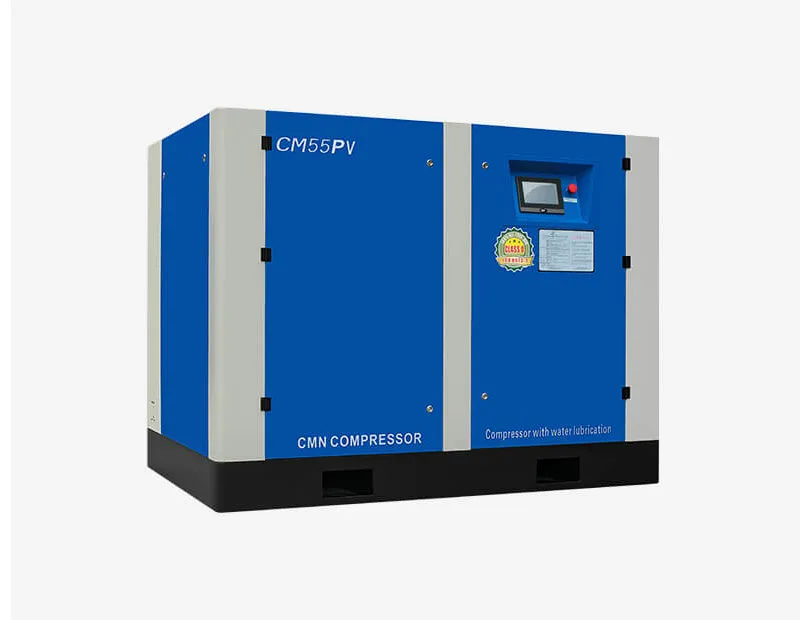
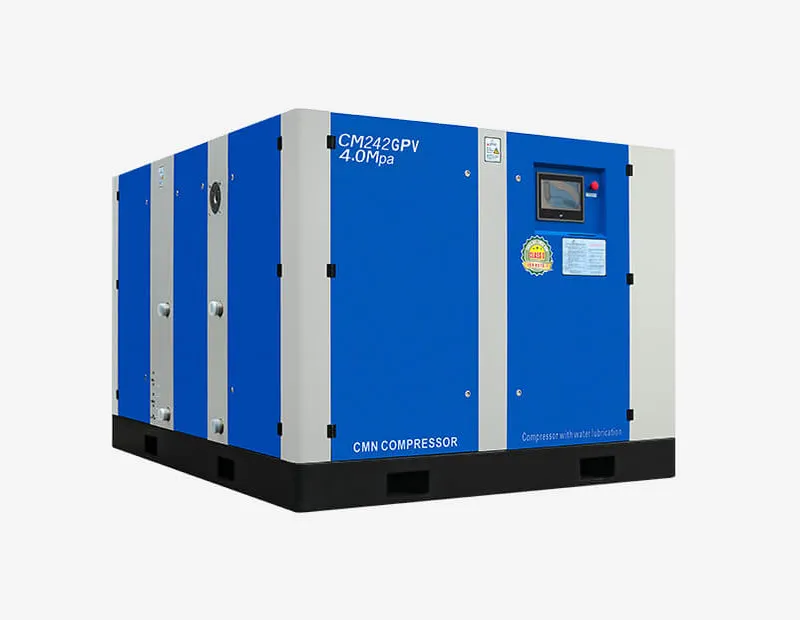
Recommended Air Compressor Products:

What Are the Applications of Compressed Air in the Textile Industry?
Air-jet looms are the equipment that consumes the largest amount of air in the textile industry. At the same time, air-coated yarn machines, texturing machines, etc. also need compressed air; the drying and transportation of slices in the chemical fiber industry also require compressed air solution.
The main production body of air-jet looms uses compressed air as the weft insertion carrier, which has strict requirements on the quality and pressure of compressed air. Its working principle is to use air as the weft insertion medium, use the jetted compressed air flow to generate friction and traction on the weft yarn, bring the weft yarn through the shed, and achieve the purpose of weft insertion through the jet generated by the air jet.
In order to ensure the normal operation of the air-jet loom, the quality of the compressed air used as a means of weft insertion is extremely important. The quality of the compressed air directly affects the quality of the product.
Related Application Scenarios:
Textile Industry Compressed Air Quality Standards and Solutions
Industrial compressed air solutions are needed in many links in textile production, but each link has different requirements for compressed air quality. However, as long as the air source of the air-jet loom is met, it can basically meet all the air needs of the entire production line. Textile products require clean, oil-free air, so oil-free screw compressors are more common in textile mills.
In the post-processing equipment, it is necessary to configure precision filters and adsorption dryers for purification. To purify solid impurities such as water and dust, the pressure dew point must reach -20°C and the solid particles must be less than 1 μm. Stable production and minimum harm to equipment and products.

How to Choose the Right Air Compressor for Textile Industry?
1. Compressed air requirements: Determine the flow, pressure and purity requirements of compressed air required in the textile industry. Determine the required gas supply capacity based on the line size, equipment usage and process requirements. Consider the air pressure requirements of spinning machines, looms, dryers and other equipment to ensure that the air compressor can meet the process needs.
2. Air quality requirements: The textile industry has high quality requirements for compressed air, especially in some textile processes. Understand the purity requirements of compressed air, such as no oil, no water, no dust, etc. Select an air compressor that meets the requirements and is equipped with an appropriate gas handling and filtration system to ensure the quality of the required gas.
3. Energy saving and reliability: Considering the energy efficiency and energy-saving characteristics of air compressors, choose products that can provide efficient and stable compressed air. At the same time, make sure to choose a compressor with high reliability and simple maintenance to reduce failures and downtime.
4. Noise and vibration levels: The textile industry usually has low noise and vibration requirements for the production environment to ensure the comfort of staff and the normal operation of equipment. Choose low noise and low vibration air compressors to ensure a quiet, stable working environment.
Why Choose Our Oil Free Screw Air Compressor?

High Purity Compressed Air

Reliability and Durability

High Efficiency and Energy Saving

Low Maintenance Costs
Why Air Compressors Are Essential for Textile Manufacturing
First, air compressors drive pneumatic machinery used in spinning, weaving, and knitting. These machines rely on compressed air to control components like valves, actuators, and cylinders, ensuring smooth operation and precise handling of delicate fibers. For example, in air-jet looms, compressed air is used to propel the weft yarn across the warp, enabling faster weaving compared to traditional shuttle looms. This boosts productivity while maintaining fabric quality.
Second, they’re key for cleaning and maintenance. Textile production generates dust, lint, and debris that can clog equipment or compromise fabric integrity. Compressed air is used to blow away contaminants from machinery, work surfaces, and even the textiles themselves, reducing downtime and defects. It’s a quick, non-abrasive way to keep things running smoothly.
Third, air compressors support dyeing and finishing processes. Pneumatic systems power sprayers and mixers that apply dyes, chemicals, or coatings evenly across fabrics. This ensures consistent color and texture, which are critical for meeting quality standards. Plus, compressed air can be used to dry fabrics faster, speeding up the production cycle.


 English
  Korean
  Chinese
  Japanese
  German
  Hindi
Hindi  French
  Italian
  Portuguese
  Russian
  Spanish
  Indonesian
  Dutch
Dutch  Arabic
  Turkish
  Polish
  Swedish
  Malay
Malay  Tamil
Tamil  Malayalam
  Norwegian
  Persian
  Ukrainian
  Vietnamese
  Urdu
Urdu  Kazakh